
Gava, G. et al. Cognition mood and sleep in menopausal transition: The role of menopause hormone therapy. Medicina (Kaunas) 55, 668 (2019).
Google Scholar
Sussman, M. et al. Prevalence of menopausal symptoms among mid-life women: Findings from electronic medical records. BMC Women Health 15, 58 (2015).
Google Scholar
Sassarini, D. J. Depression in midlife women. Maturitas 94, 149–154 (2016).
Google Scholar
Santoro, N., Epperson, C. N. & Mathews, S. B. Menopausal symptoms and their management. Endocrinol. Metab. Clin. North Am. 44, 497–515 (2015).
Google Scholar
Herber-Gast, G.-C.M. & Mishra, G. D. Early severe vasomotor menopausal symptoms are associated with diabetes. Menopause 21, 855–860 (2014).
Google Scholar
Thurston, R. C. Vasomotor symptoms: Natural history, physiology, and links with cardiovascular health. Climacteric 21, 96–100 (2018).
Google Scholar
Miller, V. M. et al. What’s in a name: Are menopausal ‘hot flashes’ a symptom of menopause or a manifestation of neurovascular dysregulation?. Menopause 25, 700–703 (2018).
Google Scholar
Dunneram, Y., Greenwood, D. C. & Cade, J. E. Diet, menopause and the risk of ovarian, endometrial and breast cancer. Proc. Nutr. Soc. 78, 438–448 (2019).
Google Scholar
Brinton, R. D., Yao, J., Yin, F., Mack, W. J. & Cadenas, E. Perimenopause as a neurological transition state. Nat. Rev. Endocrinol. 11, 393–405 (2015).
Google Scholar
Morgan, K. N., Derby, C. A. & Gleason, C. E. Cognitive changes with reproductive aging, perimenopause, and menopause. Obstet. Gynecol. Clin. North Am. 45, 751–763 (2018).
Google Scholar
Devi, G. Menopause-Related Cognitive Impairment. Obstet Gynecol 132, 1325–1327 (2018).
Google Scholar
Mosconi, L. et al. Increased Alzheimer’s risk during the menopause transition: A 3-year longitudinal brain imaging study. PLoS ONE 13, e0207885 (2018).
Google Scholar
Guarner, F. & Malagelada, J.-R. Gut flora in health and disease. Lancet 361, 512–519 (2003).
Google Scholar
Chen, K. L. & Madak-Erdogan, Z. Estrogen and microbiota crosstalk: Should we pay attention?. Trend. Endocrinol. Metab. 27, 752–755 (2016).
Google Scholar
Flores, R. et al. Fecal microbial determinants of fecal and systemic estrogens and estrogen metabolites: A cross-sectional study. J. Transl. Med. 10, 253. (2012).
Google Scholar
Liu, Y. et al. The relationship between menopausal syndrome and gut microbes. BMC Women Health 22, 437 (2022).
Google Scholar
Baker, J. M., Al-Nakkash, L. & Herbst-Kralovetz, M. M. Estrogen-gut microbiome axis: Physiological and clinical implications. Maturitas 103, 45–53 (2017).
Google Scholar
Vieira, A. T., Castelo, P. M., Ribeiro, D. A. & Ferreira, C. M. Influence of oral and gut microbiota in the health of menopausal women. Front. Microbiol. 8, 1884 (2017).
Google Scholar
Santos-Marcos, J. A. et al. Influence of gender and menopausal status on gut microbiota. Maturitas 116, 43–53 (2018).
Google Scholar
Meng, Q. et al. The gut microbiota during the progression of atherosclerosis in the perimenopausal period shows specific compositional changes and significant correlations with circulating lipid metabolites. Gut. Microb. 13(1), 27 (2021).
Google Scholar
Cryan, J. F. et al. The Microbiota-gut-brain axis. Physiol. Rev. 99, 1877–2013 (2019).
Google Scholar
Jiang, C., Li, G., Huang, P., Liu, Z. & Zhao, B. The gut microbiota and Alzheimer’s Disease. J. Alzheimer. Dis. 58, 1–15 (2017).
Google Scholar
Sharon, G., Sampson, T. R., Geschwind, D. H. & Mazmanian, S. K. The central nervous system and the gut microbiome. Cell 167, 915–932 (2016).
Google Scholar
Sandhu, K. V. et al. Feeding the microbiota-gut-brain axis: Diet, microbiome, and neuropsychiatry. Transl. Res. 179, 223–244 (2017).
Google Scholar
Foster, J. A. & McVey Neufeld, K.-A. Gut-brain axis: How the microbiome influences anxiety and depression. Trend. Neuro. sci. 36(305), 312 (2013).
Seo, D.-O. & Holtzman, D. M. Gut Microbiota: From the forgotten organ to a potential key player in the pathology of Alzheimer’s disease. J. Gerontol. A. Biol. Sci. Med. Sci. 75, 1232–1241 (2020).
Google Scholar
C, M., A, S., Ma, M. & C, S. The gut-brain axis: Interactions between enteric microbiota, central and enteric nervous systems. Ann. Gastroenterol. 28, 203 (2015).
Y, S. et al. The gut microbiome as a therapeutic target for cognitive impairment. J. gerontol. Series A, Biol. Sci. Med. Sci. 75, 1242 (2020).
Google Scholar
Liu, P. et al. Gut microbiota interacts with intrinsic brain activity of patients with amnestic mild cognitive impairment. CNS Neurosci. Ther. 27, 163–173 (2020).
Google Scholar
TILLISCH, K. et al. Consumption of fermented milk product with probiotic modulates brain activity. Gastroenterology (2013).
Google Scholar
Tillisch, K. et al. Brain structure and response to emotional stimuli as related to gut microbial profiles in healthy women. Psychosom. Med. 79, 905–913 (2017).
Google Scholar
Lu, W., Sun, Y., Gao, H. & Qiu, J. A review of multi-modal magnetic resonance imaging studies on perimenopausal brain: A hint towards neural heterogeneity. Eur. Radiol. (2023).
Google Scholar
Liu, M. et al. Changes in the regional homogeneity of resting-state magnetic resonance imaging in perimenopausal women. BMC Women. Health 21, 39 (2021).
Google Scholar
Zhang, Y., Fu, W. Q., Liu, N. N. & Liu, H. J. Alterations of regional homogeneity in perimenopause: A resting-state functional MRI study. Climacteric 25, 460–466 (2022).
Google Scholar
He, L., Guo, W., Qiu, J., An, X. & Lu, W. Altered spontaneous brain activity in women during menopause transition and its association with cognitive function and serum estradiol level. Front. Endocrinol. (Lausanne) 12, 652512 (2021).
Google Scholar
Lu, W., Guo, W., Cui, D., Dong, K. & Qiu, J. Effect of sex hormones on brain connectivity related to sexual function in perimenopausal women: A resting-state fmri functional connectivity study. J. Sex. Med. 16, 711–720 (2019).
Google Scholar
Tran, K. H. et al. Decreased GABA+ Levels in the medial prefrontal cortex of perimenopausal women: A 3T 1H-MRS study. Int. J. Neuropsychopharmacol. 26, 32–41 (2022).
Google Scholar
Sheline, Y. I. & Raichle, M. E. Resting state functional connectivity in preclinical Alzheimer’s disease. Biol. Psychiatry 74, 340–347 (2013).
Google Scholar
Zang, Y., Jiang, T., Lu, Y., He, Y. & Tian, L. Regional homogeneity approach to fMRI data analysis. Neuroimage 22, 394–400 (2004).
Google Scholar
Peltier, S. J. & Noll, D. C. T(2)(*) dependence of low frequency functional connectivity. Neuroimage 16, 985–992 (2002).
Google Scholar
Zou, Q.-H. et al. An improved approach to detection of amplitude of low-frequency fluctuation (ALFF) for resting-state fMRI: fractional ALFF. J Neurosci Methods 172, 137–141 (2008).
Google Scholar
Zang, Y.-F. et al. Altered baseline brain activity in children with ADHD revealed by resting-state functional MRI. Brain Dev 29, 83–91 (2007).
Google Scholar
Liu, N., Zhang, Y., Liu, S., Zhang, X. & Liu, H. Brain functional changes in perimenopausal women: An amplitude of low-frequency fluctuation study. Menopause 28, 384–390 (2021).
Google Scholar
Brinton, R. D., Yao, J., Yin, F., Mack, W. J. & Cadenas, E. Perimenopause as a neurological transition state. Nat. Rev. Endocrinol. 11(7), 393–405. (2015).
Google Scholar
Mosconi, L. et al. Perimenopause and emergence of an Alzheimer’s bioenergetic phenotype in brain and periphery. PLoS ONE 12(10), e0185926. (2017).
Google Scholar
Chen, K. L. & Madak-Erdogan, Z. Estrogen and Microbiota Crosstalk: Should We Pay Attention?. Trend. Endocrinol. Metab. 27(11), 752–755. (2016).
Google Scholar
Santoro, N., Roeca, C., Peters, B. A. & Neal-Perry, G. The Menopause Transition: Signs, Symptoms, and Management Options. J. Clin. Endocrinol. Metab. 106(1), 1–15 (2021).
Google Scholar
Gao, L. et al. Traditional uses, phytochemistry, transformation of ingredients and pharmacology of the dried seeds of Raphanus sativus L. (Raphani Semen) A comprehensive review. J. Ethnopharmacol. 294, 115387. (2022).
Google Scholar
Moore, K., Hughes, C. F., Ward, M., Hoey, L. & McNulty, H. Diet, nutrition and the ageing brain: Current evidence and new directions. Proc. Nutr. Soc. 77, 152–163 (2018).
Google Scholar
Moles, L. & Otaegui, D. The impact of diet on microbiota evolution and human health. Is diet an adequate tool for microbiota modulation?. Nutrients 12, 1654 (2020).
Google Scholar
Scarmeas, N., Anastasiou, C. A. & Yannakoulia, M. Nutrition and prevention of cognitive impairment. Lancet. Neurol. 17, 1006–1015 (2018).
Google Scholar
Nurk, E. et al. Cognitive performance among the elderly in relation to the intake of plant foods. Hordaland Health Study. Br. J. Nutr. 104, 1190–1201 (2010).
Google Scholar
Yang, W., Liu, Y., Xu, Q.-Q., Xian, Y.-F. & Lin, Z.-X. Sulforaphene ameliorates neuroinflammation and hyperphosphorylated tau protein via regulating the PI3K/Akt/GSK-3β pathway in experimental models of alzheimer’s disease. Oxid. Med. Cell Longev 2020, 4754195 (2020).
Google Scholar
Shiina, A. et al. An open study of sulforaphane-rich broccoli sprout extract in patients with schizophrenia. Clin. Psychopharmacol. Neurosci. 13, 62–67 (2015).
Google Scholar
Nouchi, R. et al. Brain training and sulforaphane intake interventions separately improve cognitive performance in healthy older adults, whereas a combination of these interventions does not have more beneficial effects: Evidence from a randomized controlled trial. Nutrient 13, 352 (2021).
Google Scholar
Varangis, E., Razlighi, Q., Habeck, C. G., Fisher, Z. & Stern, Y. Between-network functional connectivity is modified by age and cognitive task domain. J. Cogn. Neurosci. 31, 607–622 (2019).
Google Scholar
Gaynor, A. M. et al. Diet moderates the effect of resting state functional connectivity on cognitive function. Sci. Rep. 12, 16080 (2022).
Google Scholar
Berding, K. et al. Diet and the microbiota–Gut–Brain axis: Sowing the seeds of good mental health. Adv. Nutr. 12, 1239–1285 (2021).
Google Scholar
Armet, A. M. et al. Rethinking healthy eating in light of the gut microbiome. Cell Host Microb. 30, 764–785 (2022).
Google Scholar
Liu, Z. et al. Gut microbiota mediates intermittent-fasting alleviation of diabetes-induced cognitive impairment. Nat. Commun. 11, 855 (2020).
Google Scholar
Shi, H. et al. β-glucan attenuates cognitive impairment via the gut-brain axis in diet-induced obese mice. Microbiome 8, 143 (2020).
Google Scholar
Kakarla, R. et al. Current understanding and future directions of cruciferous vegetables and their phytochemicals to combat neurological diseases. Phytother. Res. 38(3), 1381–1399. (2024).
Google Scholar
Wang, R. et al. Sulforaphane-driven reprogramming of gut microbiome and metabolome ameliorates the progression of hyperuricemia. J. Adv. Res. 52, 19–28. (2023).
Google Scholar
Bacon, J. L. The Menopausal Transition. Obstet. Gynecol. Clin. North Am. 44, 285–296 (2017).
Google Scholar
Mosconi, L. et al. Perimenopause and emergence of an Alzheimer’s bioenergetic phenotype in brain and periphery. PLoS ONE 12, e0185926 (2017).
Google Scholar
McGrattan, A. M. et al. Diet and inflammation in cognitive ageing and Alzheimer’s Disease. Curr. Nutr. Rep. 8, 53–65 (2019).
Google Scholar
Dinan, T. G. et al. Feeding melancholic microbes: MyNewGut recommendations on diet and mood. Clin. Nutr. 38, 1995–2001 (2019).
Google Scholar
Prehn, K. et al. Caloric restriction in older adults-differential effects of weight loss and reduced weight on brain structure and function. Cereb. Cortex. 27, 1765–1778 (2017).
Google Scholar
Burokas, A., Moloney, R. D., Dinan, T. G. & Cryan, J. F. Microbiota regulation of the Mammalian gut-brain axis. Adv. Appl. Microbiol. 91, 1–62 (2015).
Google Scholar
Junges, V. M., Closs, V. E., Nogueira, G. M. & Gottlieb, M. G. V. Crosstalk between gut microbiota and central nervous system: A focus on Alzheimer’s disease. Curr. Alzheimer Res. 15, 1179–1190 (2018).
Google Scholar
Whitehouse, P. J. & George, D. R. Dignity for all: How the challenges of Alzheimer’s disease need rethinking and revaluing. JAD. 90(4), 1831–1833. (2022).
Google Scholar
Thanapornsangsuth, P. et al. Prospective evaluation of plasma phosphorylated tau in a real-life memory clinic in Thailand. Alzheimer’s & dementia. 19(6), 2745–2749. (2023).
Google Scholar
Psaltopoulou, T. et al. Mediterranean diet, stroke, cognitive impairment, and depression: A meta-analysis. Ann. Neurol. 74, 580–591 (2013).
Google Scholar
Opie, R. S. et al. Dietary recommendations for the prevention of depression. Nutr. Neurosci. 20, 161–171 (2017).
Google Scholar
Nanri, A. et al. Dietary patterns and depressive symptoms among Japanese men and women. Eur. J. Clin. Nutr. 64, 832–839 (2010).
Google Scholar
Scarmeas, N., Anastasiou, C. A. & Yannakoulia, M. Nutrition and prevention of cognitive impairment. Lancet Neurol. 17(11), 1006–1015. (2018).
Google Scholar
李运伦, 赵婧 & 霍青. 莱菔子的现代研究及临床应用. 长春中医药大学学报 0, (2011).
Gao, L. et al. Traditional uses, phytochemistry, transformation of ingredients and pharmacology of the dried seeds of Raphanus sativus L. (Raphani Semen), A comprehensive review. J. Ethnopharmacol. 294, 115387 (2022).
Google Scholar
Johnson, A. J. et al. Daily sampling reveals personalized diet-microbiome associations in humans. Cell Host Microbe 25, 789-802.e5 (2019).
Google Scholar
Magne, F. et al. The Firmicutes/Bacteroidetes ratio: A Relevant marker of gut dysbiosis in obese patients?. Nutrient. 12, 1474 (2020).
Google Scholar
Stewart, C. S., Duncan, S. H. & Cave, D. R. Oxalobacter formigenes and its role in oxalate metabolism in the human gut. FEMS Microbiol. Lett. 230, 1–7 (2004).
Google Scholar
Nishida, A. et al. Gut microbiota in the pathogenesis of inflammatory bowel disease. Clin. J. Gastroenterol. 11, 1–10 (2018).
Google Scholar
Baker, S. & The, H. C. Recent insights into Shigella. Curr. Opin. Infect. Dis. 31, 449–454 (2018).
Google Scholar
von Graevenitz, A. The role of Aeromonas in diarrhea: A review. Infection 35, 59–64 (2007).
Google Scholar
Kitazawa, M., Oddo, S., Yamasaki, T. R., Green, K. N. & LaFerla, F. M. Lipopolysaccharide-induced inflammation exacerbates tau pathology by a cyclin-dependent kinase 5-mediated pathway in a transgenic model of Alzheimer’s disease. J. Neurosci. 25, 8843–8853 (2005).
Google Scholar
Kawagoe, T., Onoda, K. & Yamaguchi, S. Subjective memory complaints are associated with altered resting-state functional connectivity but not structural atrophy. Neuroimage Clin. 21, 101675 (2019).
Google Scholar
Jung, J. et al. Impact of lingual gyrus volume on antidepressant response and neurocognitive functions in major depressive disorder: A voxel-based morphometry study. J. Affect. Disord. 169, 179–187 (2014).
Google Scholar
Kumar, N. & Priyadarshi, B. Differential effect of aging on verbal and visuo-spatial working memory. Aging Dis. 4, 170–177 (2013).
Google Scholar
Yeager, B. E. et al. Central precuneus lesions are associated with impaired executive function. Brain Struct. Funct. 227, 3099–3108 (2022).
Google Scholar
Wang, J. et al. Hippocampus-based dynamic functional connectivity mapping in the early stages of Alzheimer’s disease. J. Alzheimer’s Dis. 85, 1795–1806 (2022).
Google Scholar
Pang, L. et al. Disruption of cerebellar-cerebral functional connectivity in temporal lobe epilepsy and the connection to language and cognitive functions. Front. Neurosci. 16, 871128 (2022).
Google Scholar
Nie, K. et al. Roseburia intestinalis: A beneficial gut organism from the discoveries in genus and species. Front. Cell Infect. Microbiol. 11, 757718 (2021).
Google Scholar
Eicher, T. P. & Mohajeri, M. H. Overlapping mechanisms of action of brain-active bacteria and bacterial metabolites in the pathogenesis of common brain diseases. Nutrient. 14, 2661 (2022).
Google Scholar
McCracken, B. A. & Nathalia Garcia, M. Phylum Synergistetes in the oral cavity: A possible contributor to periodontal disease. Anaerobe 68, 102250 (2021).
Google Scholar
Horz, H.-P., Citron, D. M., Warren, Y. A., Goldstein, E. J. C. & Conrads, G. Synergistes group organisms of human origin. J. Clin. Microbiol. 44, 2914–2920 (2006).
Google Scholar
Palmas, V. et al. Gut microbiota markers and dietary habits associated with extreme longevity in healthy sardinian centenarians. Nutrient. 14, 2436 (2022).
Google Scholar
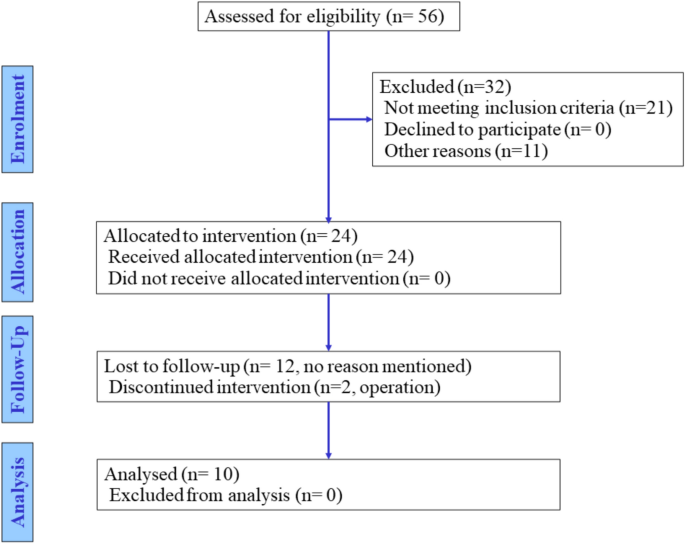
Schulz, K. F., Altman, D. G. & Moher, D. Consort 2010 statement: Updated guidelines for reporting parallel group randomised trials. J. Pharmacol. Pharmacother. 1, 100–107 (2010).
Google Scholar
Folstein, M. F., Folstein, S. E. & McHugh, P. R. ‘Mini-mental state’. A practical method for grading the cognitive state of patients for the clinician. J. Psychiatr. Res. 12, 189–198 (1975).
Google Scholar
Yu, J., Li, J. & Huang, X. The beijing version of the montreal cognitive assessment as a brief screening tool for mild cognitive impairment: A community-based study. BMC Psychiatry 12, 156 (2012).
Google Scholar
Blake, M. R., Raker, J. M. & Whelan, K. Validity and reliability of the bristol stool form scale in healthy adults and patients with diarrhoea-predominant irritable bowel syndrome. Aliment. Pharmacol. Ther. 44, 693–703 (2016).
Google Scholar
Segata, N. et al. Metagenomic biomarker discovery and explanation. Genome. Biol. 12, R60 (2011).
Google Scholar
Douglas, G. M. et al. PICRUSt2: An improved and extensible approach for metagenome inference. 672295 Preprint at (2019).
Langille, M. G. I. et al. Predictive functional profiling of microbial communities using 16S rRNA marker gene sequences. Nat. Biotechnol. 31, 814–821 (2013).
Google Scholar
Jia, X.-Z. et al. RESTplus: an improved toolkit for resting-state functional magnetic resonance imaging data processing. Sci. Bull. 64, 953–954 (2019).
Google Scholar
Yan. DPARSF: a MATLAB toolbox for “pipeline” data analysis of resting-state fMRI. Front. Syst. Neurosci. (2010) https://doi.org/10.3389/fnsys.2010.00013.
Yan, C.-G., Wang, X.-D., Zuo, X.-N. & Zang, Y.-F. DPABI: Data processing & analysis for (Resting-State) brain imaging. Neuroinform 14, 339–351 (2016).
Google Scholar
link


:max_bytes(150000):strip_icc()/GettyImages-1644727881-73ef3c9679a6447faafc74eb0ff22f1e.jpg "6 Fish That Offer the Most Benefits for Your Heart and Brain")







+ There are no comments
Add yours