
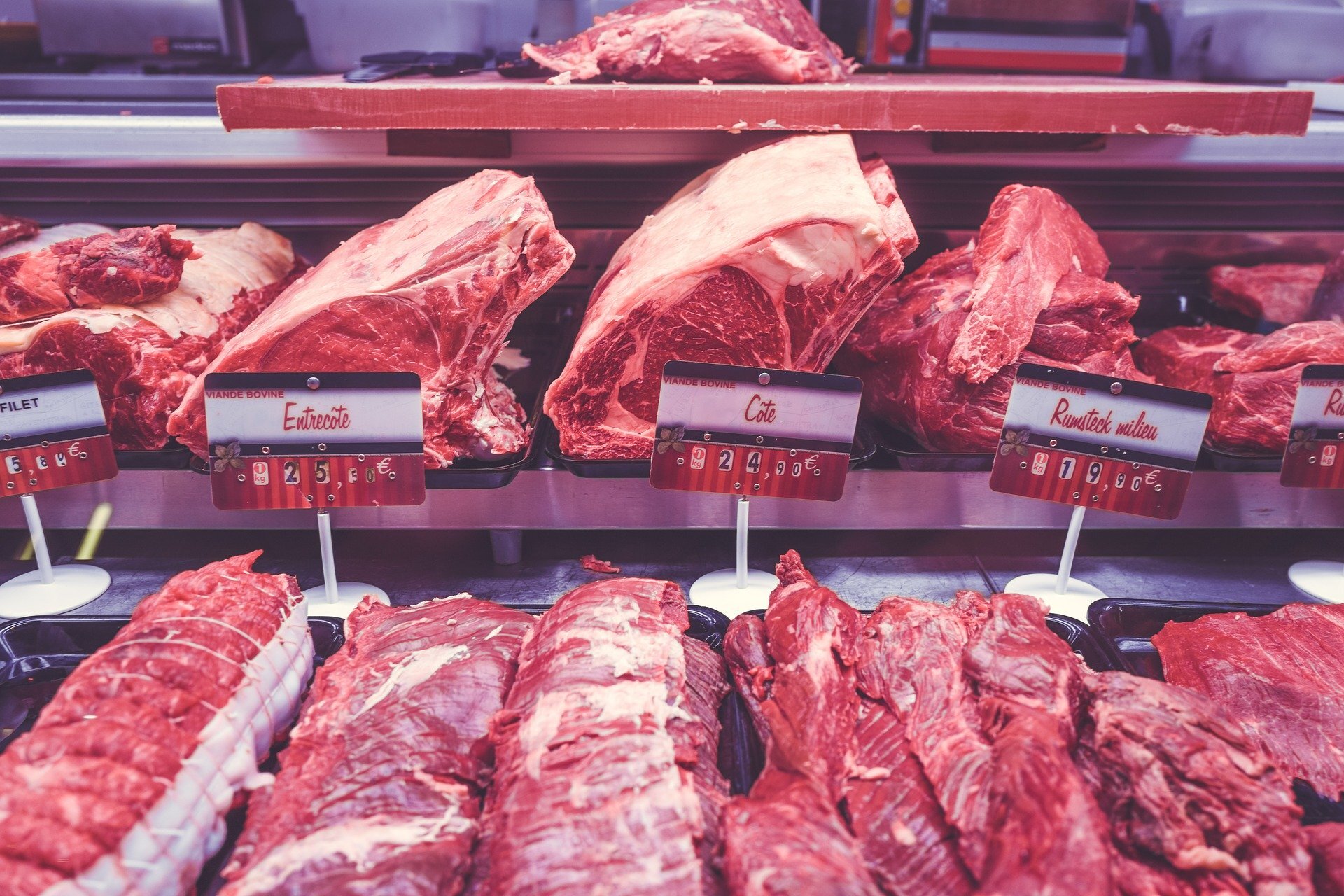
Red meat has long been associated with cardiovascular disease, the leading cause of death globally. But new research from South Dakota State University offers a new perspective.
According to Samitinjaya Dhakal, assistant professor in SDSU’s School of Health and Human Sciences, including red meat in high-quality diets improves adequacy of nutrients related to mental health and was associated with favorable shifts in gut microbial diversity.
“What was really compelling was the significant nutritional benefit we saw in healthy eaters who consumed red meat,” Dhakal said. “This suggests the public health message shouldn’t be about complete elimination, but rather about building a high-quality diet into which lean red meat can fit.”
Dhakal and his research team utilized data from the American Gut Project, the largest open-source microbiome initiative to date. The project provides researchers a rich resource of dietary, microbial, and health data to address these types of complex questions.
From the database, 4,915 adults were categorized into four different groups based on their diets and red meat consumption. The U.S. Department of Agriculture’s Healthy Eating Index, which measures diets based on the Dietary Guidelines for Americans, was used to score each individual’s diets based on a 0–100 scale.
The four categories were high healthy eating index (greater than 80) with red meat consumption; high healthy eating index without red meat consumption; low healthy eating index with red meat consumption; and low healthy eating index without red meat consumption.
“What we saw is that people following a high-quality diet maintained a healthy weight, regardless of whether they ate red meat or not,” Dhakal said. “But within that healthy context, the red meat consumers showed a benefit not just in protein intake, but importantly, in meeting their needs for brain health-critical nutrients like zinc, selenium, vitamin B12 and choline.”
Higher healthy eating index scores, regardless of red meat consumption, showed lower odds of depression, PTSD and bipolar disorder. Strong gut microbial diversity was linked with high healthy indexes and red meat consumption.
“Our findings support a less rigid approach to healthy eating,” Dhakal said. “It shows that focusing on overall dietary pattern is a more powerful tool for long-term well-being than just rigidly eliminating specific foods.”
The research was presented on June 2 at Nutrition 2025, the annual meeting of the American Society for Nutrition, in Orlando, Florida. The abstract of the study, titled “The inclusion of red meat in higher-quality diets supports nutritional adequacy, microbial diversity and mental health with no observed adverse effects,” was published in Current Developments in Nutrition.
The full study is currently under review to be published in the journal Scientific Reports.
More information:
Samitinjaya Dhakal et al, The Inclusion of Red Meat in Higher-Quality Diets Supports Nutritional Adequacy, Microbial Diversity, and Mental Health With No Observed Adverse Effects, Current Developments in Nutrition (2025). DOI: 10.1016/j.cdnut.2025.106040
South Dakota State University
Citation:
Red meat consumption within high-quality diets may support mental health, study finds (2025, August 12)
retrieved 16 August 2025
from
This document is subject to copyright. Apart from any fair dealing for the purpose of private study or research, no
part may be reproduced without the written permission. The content is provided for information purposes only.
link

:max_bytes(150000):strip_icc()/GettyImages-1644727881-73ef3c9679a6447faafc74eb0ff22f1e.jpg "6 Fish That Offer the Most Benefits for Your Heart and Brain")








+ There are no comments
Add yours