
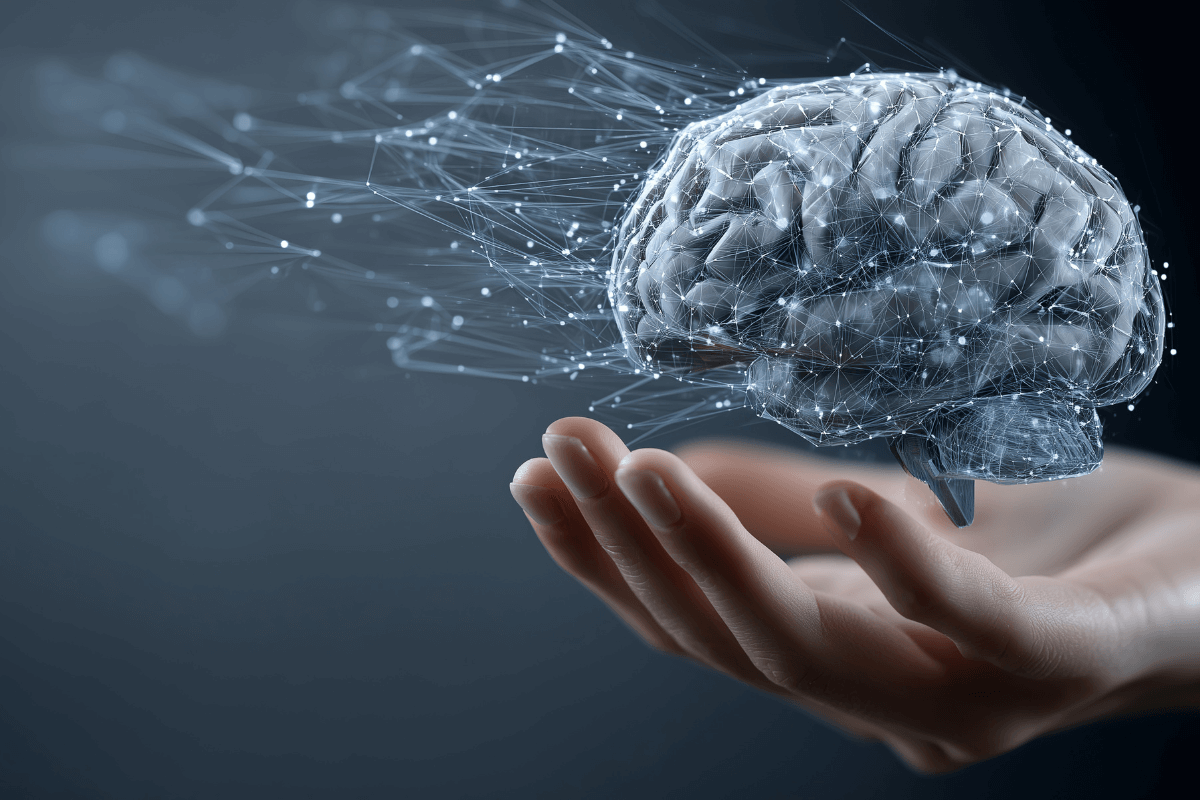
Data and Artificial Intelligence (AI) underpin every dimension of modern brain research and brain health. Given the complexity and heterogeneity of brain disorders, the potential for digital tools and AI to accelerate prevention, diagnosis and treatment cannot be overstated. Rapid progress in AI-enabled drug discovery is also reshaping global competitiveness.
As recent data demonstrates, there is a significant shift in global biomedical research activity. In 2024, China registered more clinical trials than the United States, approximately 7,100 versus 6,000, signalling a wider reconfiguration of the innovation landscape.
A focused effort to build a vertical AI for health plan, as recommended by Mario Draghi in his report on European competitiveness, is emerging as a major strategic priority for Europe. It would amount to a sector-specific ecosystem encompassing data, infrastructure, regulation, talent and investment to enable the development, testing and large-scale deployment of AI solutions. Its focus should be on mission-driven, real-world applications where Europe can build a competitive advantage.
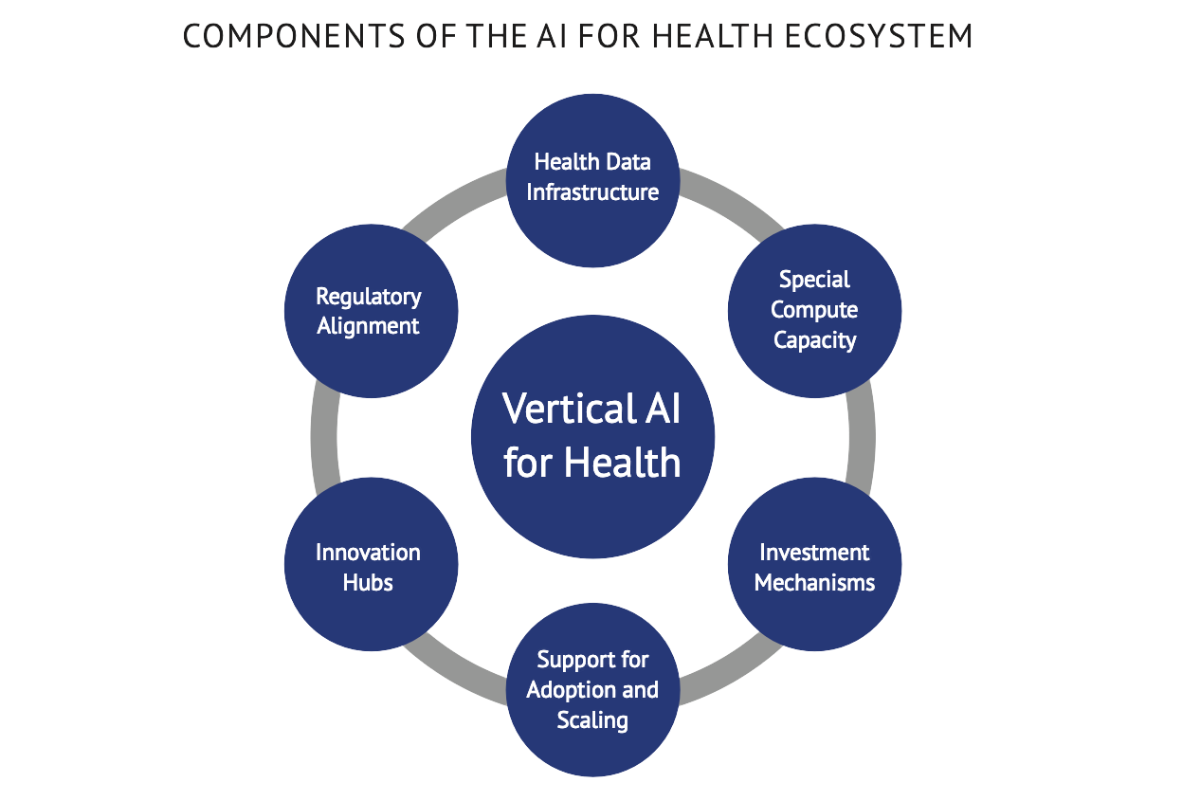
Recent policy activity in the EU demonstrates significant political momentum, reflected in the Apply AI Strategy, the Life Sciences Strategy’s substantial AI dimension, the European Health Data Space, and the Biotech Act. The urgency of delivering on these commitments is reinforced by Europe’s ambition to become the world’s most attractive region for life sciences and AI by 2030.
With 2030 now only four years away, the timeline for achieving these objectives is exceptionally tight. Brain research and brain health are areas in which an AI-driven transformation is urgently needed, making them important testbeds for the use of vertical AI in health. Brain diseases involve high heterogeneity, multi-dimensional symptoms and fragmented clinical pathways. They expose systemic barriers that vertical AI aims to solve in terms of fragmentation across EU member states, slow translation from research to clinical practice and uneven adoption of digital and AI tools in clinical settings.
There are numerous examples where AI is already making an important contribution, whether it is early detection of Alzheimer’s Disease, automated Multiple Sclerosis (MS) lesion quantification, digital biomarkers in depression and movement disorders, speech-based detection of cognitive decline, or virtual brain models.
In this context, brain health could serve as a pilot for Europe’s AI-for-health ecosystem. It can be used to test and refine end-to-end approaches from multimodal data, validation pathways, governance and real-world clinical integration before broader deployment.
Read the full Policy Brief here.
Elizabeth Kuiper is Associate Director at the European Policy Centre and Head of the Social Europe and Wellbeing Programme.
Paweł Świeboda is a Senior Fellow at the EPC, Founder & Director of NeuroCentury and Co-Founder, Brain Capital Alliance.
The support the European Policy Centre receives for its ongoing operations, or specifically for its publications, does not constitute an endorsement of their contents, which reflect the views of the authors only. Supporters and partners cannot be held responsible for any use that may be made of the information contained therein.

link












:max_bytes(150000):strip_icc()/GettyImages-1644727881-73ef3c9679a6447faafc74eb0ff22f1e.jpg "6 Fish That Offer the Most Benefits for Your Heart and Brain")
+ There are no comments
Add yours