

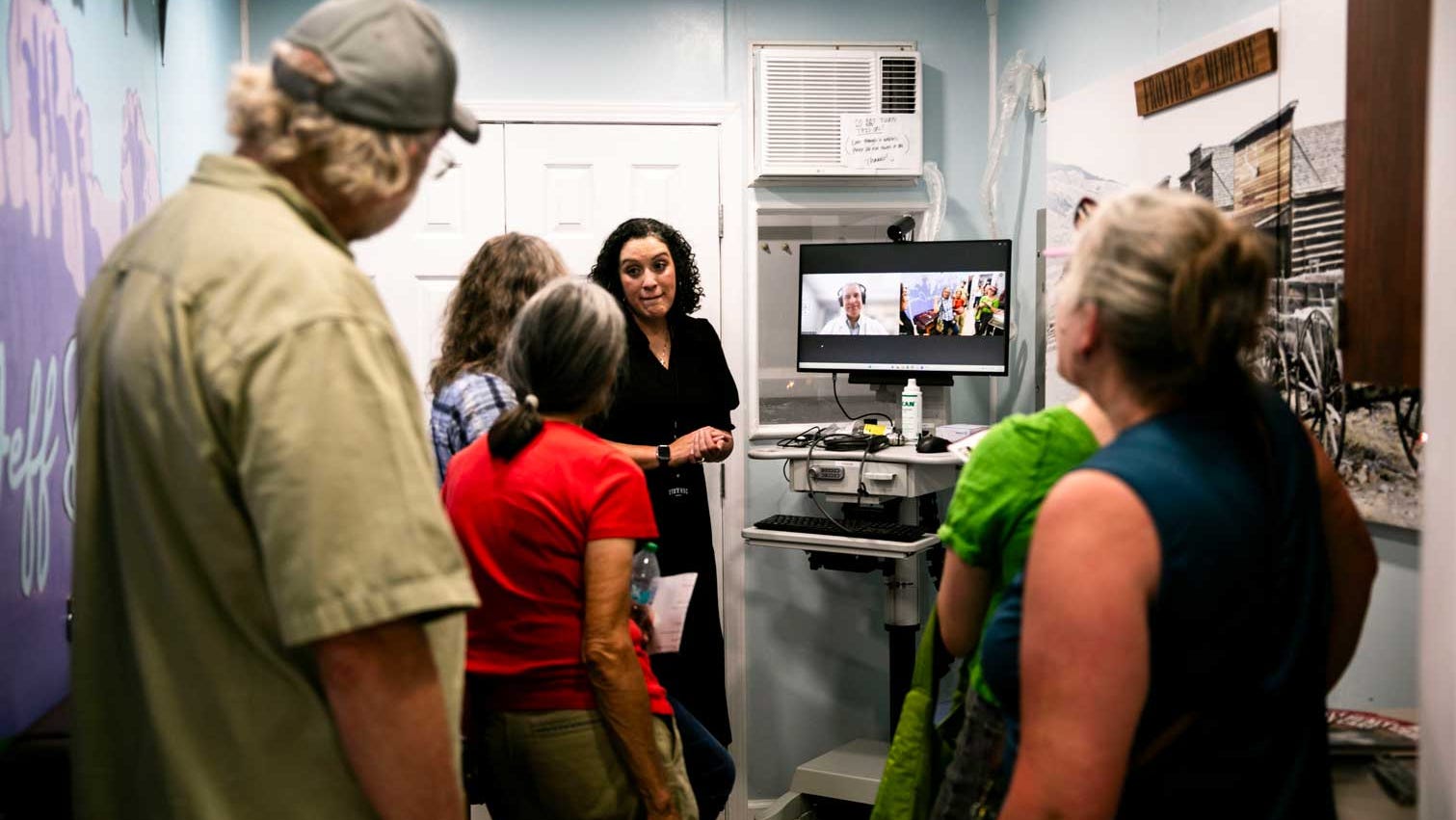

Texas Tech HSC President Lori Rice-Spearman described new partnership with Texas A&M in far West Texas
Texas A&M University Health Science Center and Texas Tech University Health Sciences Center this week joined with the student-led organization, Texas A&M BUILD—along with local leadership and other collaborators—to unveil a new, innovative medical care facility for a Trans-Pecos region rural community: a 40-foot, retro-fitted shipping container.
As a neurologist who specializes in dementia and other cognitive disorders, I’m often asked how to maximize brain health throughout the lifespan. Healthy Aging Month gives us a chance to focus on just that.
The risk of developing some of the more common causes of dementia, in particular Alzheimer’s disease, appears to be affected by certain lifestyle activities and other health-related behaviors. Dementia and its precursor, mild cognitive impairment, are not normal parts of aging.
It’s important to understand that dementia isn’t a disease itself. It’s a symptom or an outcome of a disease of the brain. While Alzheimer’s disease remains the leading cause of dementia, other factors such as stroke, brain tumors and even certain types of infection can also lead to its development.
While there is no guaranteed way to prevent dementia, research such as the U.S. POINTER study presented recently at the Alzheimer’s Association International Conference shows that lifestyle choices have a powerful impact on brain health. According to the 2024 Lancet Commission report, up to 45% of dementia risk may be modifiable. That means nearly half of the risk of someday developing dementia could be reduced with healthier living habits.
In short, what’s good for the heart is good for the brain. That includes regular physical activity, a healthy diet, good sleep habits, managing blood pressure and blood sugar and avoiding tobacco.
While physical health lays the foundation of brain health, social interaction and cognitive engagement are also crucial.
The phrase “use it or lose it” applies to your brain just like your muscles.
Engaging socially is one of the best mental workouts we can have, whether it’s talking to friends, joining a club or just chatting with neighbors. In one conversation, you’re reading facial expressions, processing language, thinking critically and responding emotionally. That’s a full-brain workout.
Social isolation, on the other hand, is a strong risk factor for cognitive decline later in life. Staying connected matters more than many people realize.
Crossword puzzles, brain-training apps and games such as Sudoku can be fun. However, they may not offer as much benefit as activities that combine mental challenge with social interaction, which seem to be the most effective.
Another concept to keep in mind is cognitive reserve. Think of it as your brain’s ability to adapt and work around damage. People with higher cognitive reserve, often developed through formal education and lifelong learning, may show symptoms of Alzheimer’s later, even if the disease has already started. It’s never too late to build that reserve. Learning something new, staying curious and being engaged with others might all help build resilience in the brain.
No single activity, supplement, food or exercise can prevent dementia in everyone. I’ve treated people who developed Alzheimer’s disease despite having appeared to be incredibly healthy in earlier years.
Still, by reducing risk factors for disease and living well, we give ourselves a better shot at maximizing the health of our brain and our independence as we age.
The last few years have given us many reasons to have hope for a better cognitive future.
We’re seeing new blood tests for Alzheimer’s disease, promising treatments and a better understanding of risk factors across the lifespan.
We’re learning how to change the course of the disease through new medications and lifestyle interventions. I look forward to the day when Alzheimer’s disease is just a memory.
John Bertelson, M.D., is a neurologist with Texas Tech Physicians and co-medical director of the Texas Tech University Health Sciences Center Garrison Institute on Aging’s Memory Clinic
link





:max_bytes(150000):strip_icc()/Health-GettyImages-1203392811-d7b532109ae648f29c53dd079b53f8ae.jpg "New Study Links 6 Artificial Sweeteners to Faster Cognitive Decline")




:max_bytes(150000):strip_icc()/GettyImages-1644727881-73ef3c9679a6447faafc74eb0ff22f1e.jpg "6 Fish That Offer the Most Benefits for Your Heart and Brain")
+ There are no comments
Add yours