

New research identifies 14 modifiable dementia risk factors and points to practical steps people and communities can take to reduce risk.
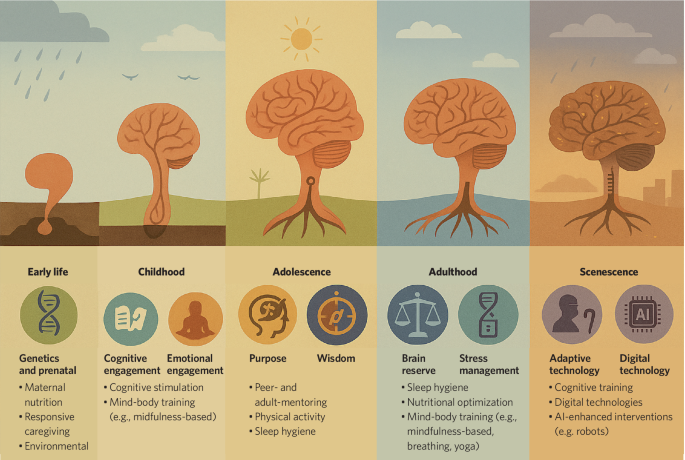
Dementia touches tens of millions of people worldwide — and that number is expected to climb in the coming decades. While age and genetics play a major role, researchers have found that lifestyle changes can significantly lower the risk of developing dementia. The Lancet Commission on Dementia Prevention has outlined 14 lifestyle factors that could help delay or prevent up to 45 percent of dementia cases.
In a separate analysis drawing on more than 600 studies, researchers concluded that high blood sugar, hearing loss, and low levels of education stand out as the most influential dementia risk factors in the United States. The two-year analysis — a joint effort by AARP, the Alzheimer’s Disease Data Initiative, and the Institute for Health Metrics and Evaluation at the University of Washington — examined the U.S. population and highlighted differences from state to state.
“Understanding which factors have the greatest impact on dementia puts us in a stronger position to reduce the risk in our communities,” said Juan Rodriguez, AARP’s vice president of brain health. “These findings offer clear steps people and communities can take today to support their brain health, promote healthy aging and give older Americans more quality time to live their lives as they choose.”
The analysis examined the 12 dementia risk factors first outlined in 2020 by the Lancet Commission. In 2024, the commission added high cholesterol and vision loss to the list, bringing the total to 14 risk factors. These additional risk factors weren’t included in the two-year analysis, which was already underway when they were added.
Eric Larson, an author of the Lancet study and senior investigator at Kaiser Permanente Washington Health Research Institute in Seattle, said that although people can’t control their genetics or change their socioeconomic circumstances, people of all ages can, to varying extents, make lifestyle choices to improve their health.
“In my own [clinical] practice, I’ve been telling patients it would be a good idea to exercise regularly,” Larson said. “When they found out that you could preserve your brain and reduce your risk of dementia, it was actually a powerful motivator for many people to become a regular exerciser.”
Various risk factors — spanning early, midlife and later life — are linked to people’s risk of dementia, according to the Lancet report. Less education before the age of 45 is associated with 7 percent of dementia cases. The leading risk factor from the age of 45 to 65 is hearing loss, which is linked to 8 percent of dementia cases, followed by traumatic brain injury, hypertension, alcohol and obesity. Smoking at ages older than 65 is linked to 5 percent of dementia cases, followed by depression, social isolation, physical inactivity, air pollution and diabetes.
“There is a lot you can do to reduce your risks. It will not all be relevant to you, see what applies to you and how you can change it,” Gill Livingston, professor of psychiatry of older people at University College London and an author of the Lancet report, wrote in an email to Being Patient.
Among all the factors examined in the follow-up two-year research collaboration, high blood sugar emerged as the most strongly linked to dementia. The condition can injure the brain’s tiny blood vessels, and the analysis found higher dementia risk in people with both diabetes and prediabetes. (For more information, see the “The diabetes-dementia link” section below).
The Lancet study identified 14 dementia risk factors that people can take steps to modify. Being Patient takes a closer look at how each risk factor is linked to dementia:
1. The diabetes-dementia link
Diabetes is linked to the degeneration of small blood vessels as well as strokes — which are in turn risk factors of dementia. It’s possible beta-amyloid plaques and tau tangles, the biomarkers of Alzheimer’s, also play a role in high blood sugar levels, Larson said. But more research is needed to pinpoint biological mechanisms linking diabetes and dementia beyond those related to blood flow.
Most people with diabetes have type 2, which leads to a two-fold increased risk of developing Alzheimer’s. As cells fail to respond to insulin — the hormone that manages blood sugar levels — the body produces more insulin, which in turn, leads to overly high levels of blood sugar.
Here’s what you can do: Researchers warn that type 2 diabetes and Alzheimer’s are “reaching epidemic proportions,” as they urge people to manage their stress, get a good night’s sleep, maintain a balanced weight, eat a healthy diet with less sugary beverages, stay active and exercise regularly.
Read more about past research on the link between the brain’s metabolic function, diabetes and dementia.
2. Education and cognitive health
Receiving more education was also a top driver to reduced risk of dementia in the two-year collaboration analysis. For example, compared with individuals who completed 18 years of education, those with 12 years had a 23 percent higher risk.
Experts say the reasons go beyond classroom learning. More years of education tend to be linked with higher earnings, which can translate into better access to health care, healthier food, safer neighborhoods with cleaner air and more stable housing. All of these factors support overall health and may help protect the brain, said Dr. Ariel Green, a geriatrician and associate professor of medicine at the Johns Hopkins University School of Medicine.
According to Lon Schneider, an author of the Lancet report and professor of psychiatry, neurology, and gerontology at the University of Southern California, the more we learn, the more “cognitive reserve” we build up. While connections between brain cells, also known as synapses, may falter due to aging and sickness, “You have more reserves to start with, so you’re more resilient” against illnesses, said Schneider.
“There is a lot you can do to reduce your risks. It will not all be relevant to you, see what applies to you and how you can change it.” –Gill Livingston, at University College London
Here’s what you can do: Engaging in intellectual activities later in life can potentially help maintain cognitive abilities. One study in China which found people older than the age of 65 who read, played games or bet more frequently were less likely to develop dementia. Another study showed that people who participated in intellectual, physical and social activities in midlife were more likely to have better cognition in old age.
Read more about past research on the link between early childhood education and Alzheimer’s disease, the most common form of dementia.
2. Hearing loss and dementia risk
The researchers of the two-year study also found that hearing loss was also in the top three modifiable dementia risk factors. Compared with people who hear normally, those with moderate hearing loss had about a 29 percent higher likelihood of developing dementia, while people with severe hearing loss had a roughly 49 percent higher risk.
Older adults with hearing problems can be helped by hearing aids. “[Hearing loss is] socially isolating,” Larson said. “Social isolation and inability to engage with others in speech and listening has a detrimental effect on maintaining brain reserve.”
Here’s what you can do: To prevent hearing loss, Larson urged people to avoid excessive noise. Those who have hearing difficulties should seek testing and, if appropriate, use a hearing aid.
Read more about past research on the link between hearing loss and cognitive decline
4. The link between traumatic brain injury (TBI) and dementia risk
Traumatic brain injury (TBI), a risk factor in midlife, is often caused by injuries sustained from automobile, sports accidents and exposure to blasts among members of the military. Severe TBI is linked to abnormal tau proteins, a biomarker of Alzheimer’s. People aged 50 years or older with a history of TBI are at an increased risk of dementia compared to those without TBI.
Meanwhile, falls are the leading cause of TBI among older adults. And older adults with concussion have double the risk of dementia.
Here’s what you can do: To reduce risk of falls for older adults, doing balance exercises and maintaining muscle strength especially in the legs is crucial, Larson said. Lookout for items around your home which can cause a trip. And avoid walking on slick surface barefoot or with stockings.
Read more about past research on TBI and dementia among military veterans, and the different proteins involved in TBI.
5. Dementia and excessive drinking or alcoholism
According to Andrew Sommerlad, an author of the report and a senior research fellow at University College London, excessive consumption of alcohol can lead to damaged brain cells and blood vessels, shrinkage of brain tissues and severe nutritional deficiencies. And one study shows alcohol use disorder is a major risk factor for all types of dementia, especially early-onset dementia which strikes people before the age of 65.
Here’s what you can do: The Lancet team suggested drinking less than 210 milliliters of alcohol weekly, the amount of alcohol which appears to reduce risk of dementia. For people who are chronic drinkers, Sommerlad said cutting back on alcohol a little each day by having smaller or lower-strength drinks is likely the safest and most effective way to reduce the consumption of alcohol.
“Recognizing the problem and setting a realistic target for reducing your alcohol intake is a really important first step,” he said in an email. “Reducing alcohol intake is often difficult for people who have been chronic heavy drinkers, and it is a good idea to consult with a healthcare professional about how to approach this as well as seeking help from organizations and friends or family to support this process.”
Read more about past research on how alcohol use can affect different regions of the brain
6. Obesity and dementia risk
Research shows people who are obese are more likely to develop dementia later in life. Some researchers say obesity should be considered premature aging, as it is strongly linked to chronic health problems in old age.
According to Adesola Ogunniyi, an author of the report and a professor of medicine at University of Ibadan, Nigeria, obesity is a risk factor for chronic cardiovascular diseases, which damage blood vessels in the brain and reduce blood flow. This leads to a cascade of inflammation and oxidative stress — an imbalance between oxygen-containing molecules and antioxidants — which would eventually lead to the death of brain cells.
Here’s what you can do: Ogunniyi recommended losing weight, avoiding excess calories and reducing sugary beverages along with staying active and exercising.
Read more about past research on the link between obesity in midlife, body mass index (BMI) and dementia
7. Smoking and dementia risk
“Smoking is likely to increase risk of dementia as it causes problems with blood vessel function meaning that a person is more likely to have small strokes or small bleeds in the brain, and it may also be that chemicals in tobacco smoke [can] cause inflammation,” Sommerlad said.
Here’s what you can do: Even if you’re a smoker, it’s not too late to stop smoking. After all, older adults who stop smoking may substantially reduce their risk of dementia. Get help to stop smoking, Livingston said, such as by using nicotine patches.
Read more about past research on the link between smoking and dementia.
8. Depression and cognitive decline
People who are developing dementia are more likely to become depressed, Livingston said. Depression is also a risk factor of dementia, though she noted that researchers still aren’t sure why. Some scientists suggest depression can speed up brain aging and lead to shrinking of the brain.
And Livingston said people with depression may be less likely to engage in activities that stimulate their brain like exercising and interacting with others.
Here’s what you can do: Exercising and interacting with at least some people can help with depression and lower our risk of dementia, Livingston said. As the causes of depression vary among individuals, she recommended people with depression to see their general practitioner, and decide whether therapy or medication would help.
Read more about past research on the link between demenetia and depression.
9. Loneliness and social isolation
Forming social connections can enhance a person’s cognitive reserve. In other words, paying attention to others and interacting with them keeps our brains active and healthy, Livingston said.
Additionally, some studies find the opposite — social isolation — may increase people’s risk of dementia. One study shows that people who are single lifelong and those who are widowed are more likely to have dementia compared to married couples.
Here’s what you can do: Livingston suggested seeing and talking to people, walking with others and chatting over tea, coffee or food — activities you may find pleasure in doing with others. She reminded us of an important point amid the coronavirus shutdown, a public health crisis which has left many feeling socially isolated: “Try to be physically distant but not socially distant.”
Read more about past research on the link between social connection and dementia.
10. Exercise for cognitive health
According to a number of studies, staying physically active and exercising regularly appears to reduce the risk of developing dementia. Researchers suggest exercise may trigger neurochemicals and the birth of neurons in the brain, improving mood, memory and learning. It’s never too late to start exercising, experts say: People who improve their fitness over time are less likely to develop dementia.
Here’s what you can do: Aspire to exercising 150 to 210 minutes of exercise a week, Larson said. It can be a lot for some people, he admitted. And 15 minutes of exercise three times a week can go a long way compared to staying inactive.
“People tend not to realize that you don’t have to be a marathon runner,” Larson said. “You just have to have regular physical activity. The greatest danger is not doing anything.”
Read more about past research on the enduring benefits of exercise, and how it affects mood and cognition
11. Air pollution and brain health
Air pollution isn’t just harmful for our respiratory health: Emerging evidence shows that people who are exposed to air pollution are at a higher risk of dementia. In fact, people who live close to major roads and freeways, have higher odds of developing dementia. And some scientists have suggested that exposure to air pollution can lead to brain inflammation.
Here’s what you can do: Avoid the outdoors when air pollution levels are high, Larson said, such as instances of wildfires. Meanwhile, researchers urge policy makers to consider increasing people’s access to green spaces, reducing traffic and the number of highways in residential areas.
Read more about past research on the link between heart disease, Alzheimer’s, and air pollution
12. High high blood pressure and dementia risk
High blood pressure can cause blood clots in arteries, blocking blood flow to the brain. Stroke and the loss of brain cells may follow, and the brain could subsequently shrink.
People with high blood pressure in midlife are more likely to develop dementia later in life (some researchers suggest high blood pressure, as early as our 30s, could increase risk of dementia later on).
Here’s what you can do: “Make sure you know your blood pressure if you are 40,” Livingston said. The Lancet team recommended aiming for a systolic blood pressure — the pressure of the blood against artery walls as the heart beats — of 130mm Hg or less in midlife, though Larson cautioned against reaching an overly low blood pressure.
Experts say managing stress and sleeping well, maintaining a stable weight and eating a healthy diet of less sugary foods, exercising regularly and refraining from smoking can help control blood pressure.
Read more about past research on the link between hypertension and dementia, and insights on how hypertensive treatment may reduce risk of cognitive decline.
13. Vision loss
Emerging evidence shows that untreated vision loss later in life is linked to a higher risk of cognitive decline and dementia. Large population studies suggest that people with visual impairment are more likely to develop dementia than those with healthy vision. The Lancet Commission reported that untreated vision loss, which affects about one in eight people over 50, is linked to a 47 percent higher risk of developing dementia.
Certain eye conditions, like cataracts and diabetic retinopathy, appear to be especially associated with higher dementia risk, while others, like glaucoma and age-related macular degeneration, are less consistently tied to dementia.
Experts say regular vision checks could help clinicians flag who might be at higher risk and diagnose dementia earlier. Some are also hopeful that treating vision loss itself may help lower a person’s chances of developing dementia.
Here’s what you can do: Keep up with regular eye exams, and make sure correctable problems like cataracts and diabetic eye disease are treated. Act quickly if your vision changes. If you notice sudden or worsening problems, see an eye doctor promptly as they can identify signs that warrant a neurology referral like posterior cortical atrophy.
Read more about past research on the link between vision loss and dementia.
14. High LDL cholesterol
The Lancet Commission’s 2024 update includes high LDL cholesterol in midlife as a modifiable risk factor for dementia. Long-term studies and genetic analysis suggest that people with higher LDL and lower HDL cholesterol have an increased risk of dementia.
New findings indicate that older adults whose total and LDL cholesterol levels fluctuated more from year to year were more likely to develop dementia or experience cognitive decline.
Observational research suggests that treating high cholesterol over time is associated with lower dementia risk, though clinical trials starting statins late in life have not shown clear cognitive benefits.
Here’s what you can do: By midlife, know your cholesterol numbers and talk with your doctor about how often to re-check them and what targets make sense for you. Eating a heart-healthy diet, exercising regularly, maintaining a healthy weight, and not smoking all help lower LDL and support brain health.
Read more about past research on how cholesterol may influence dementia risk.
link






:max_bytes(150000):strip_icc()/VWH-GettyImages-1351033064-10bf4d0391314cd2a89bd6f3f24f2414.jpg "What Happens to Your Brain When You Eat Choline-Rich Foods Like Eggs")



:max_bytes(150000):strip_icc()/GettyImages-1644727881-73ef3c9679a6447faafc74eb0ff22f1e.jpg "6 Fish That Offer the Most Benefits for Your Heart and Brain")
+ There are no comments
Add yours