


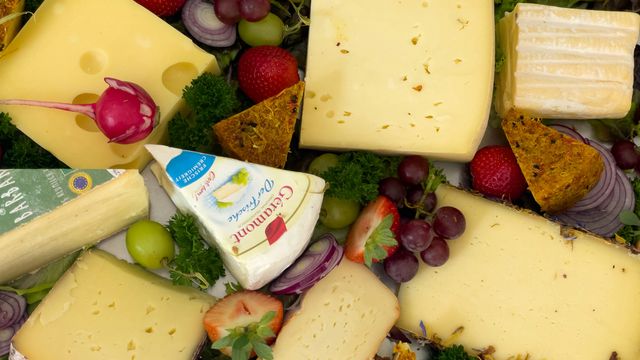
People who eat full-fat cheese and cream may have a lower risk of developing dementia, a new study suggests.
The study, which analyzed the dietary habits of more than 27,000 people, found that those who ate around 50 grams of full-fat cheese daily had a 13% lower risk of developing all-cause dementia than those who ate only around 15 grams per day.
“In earlier work, we found that higher intakes of fermented milk products such as yoghurt, as well as cheese, were associated with a lower risk of cardiovascular disease. Because vascular health and brain health are closely linked, it was a natural next step to examine whether dairy intake might also relate to dementia risk,” senior study author Dr. Emily Sonestedt, associate professor in nutritional epidemiology at Lund University, told Technology Networks.
The research is published in Neurology.
The effects of diet on brain health
What you eat can have a significant effect on your brain. Randomized trials have shown that adherence to the Mediterranean diet is associated with better episodic and working memory. The Dietary Approaches to Stop Hypertension (DASH) diet, while intended to reduce elevated blood pressure, is also thought to have a potentially beneficial effect on brain health; following the DASH diet may reduce the risk of cognitive decline, due to the known association between hypertension and cognitive function.
Most notably, the MIND diet—or the Mediterranean-DASH Diet Intervention for Neurodegenerative Delay—combines elements from both the Mediterranean and DASH diets, with the explicit aim of slowing cognitive decline and preventing dementia with aging.
The MIND diet
The MIND diet promotes the consumption of 10 “brain healthy” food groups, which are identified as: green leafy vegetables, other vegetables, nuts, berries, beans, whole grains, seafood, poultry, olive oil, and wine.
It also lists five “unhealthy” food groups, on the basis of their saturated and trans fat contents: red meats, butter and margarine, cheese, pastries and sweets, and fried/fast food.
“Cheese is currently listed as a food to limit in the MIND diet, yet relatively few studies have examined cheese in relation to dementia. Those that do exist tend to suggest neutral or even protective associations,” Sonestedt points out. “Together, these factors motivated us to explore dairy consumption and dementia risk in more detail.”
High-fat dairy linked to decrease in all-cause dementia risk
To investigate whether there are any links between dairy product consumption and dementia, the researchers assessed dietary data collected from 27,670 adults enrolled in the Malmö Diet and Cancer population study. Of these, 3,208 people developed dementia during the 25-year follow-up period.
“The Malmö Diet and Cancer Study collected very detailed baseline dietary data (7-day food diary, a 168-item food frequency questionnaire and a face-to-face interview) and extensive background information on education, smoking, alcohol, physical activity, BMI, medical history, and medication,” Sonestedt explained. “Dementia outcomes were identified through national patient and cause-of-death registers, and many diagnoses were clinically validated. This combination let us adjust for a wide range of lifestyle and health confounders and run multiple sensitivity analyses to test robustness.”
After adjusting for general lifestyle factors, such as smoking, alcohol consumption, and physical activity, the researchers found that people who ate 50 grams of full-fat cheese (>20% fat) daily had a 13% lower risk of developing all-cause dementia, compared to those who consumed much smaller amounts of cheese, around 15 grams per day. Around one-fourth of the individuals in the study consumed more than 50 grams of cheese daily.
Compared to non-consumption, those who ate more than 20 grams per day of high-fat cream (>30% fat) were also found to have a 16% lower risk of all-cause dementia.
The researchers also looked at the effects of cheese intake on specific subtypes of dementia. They found a 29% lower risk of vascular dementia in the group who ate higher amounts of full-fat cheese. A smaller (13%) decrease was also seen for Alzheimer’s risk.
“The strongest and most consistent signal was for vascular dementia; those with higher high-fat cheese intake had a notably lower risk of vascular dementia. We also observed a smaller association for Alzheimer’s disease, but that appeared mainly among people without the APOE ε4 risk allele,” said Sonestedt. “There were no clear associations for low-fat dairy, milk, or yoghurt.”
More studies needed before dietary guidelines are changed
While full-fat cheese and cream were associated with a reduced risk of dementia, other dairy products did not show similar effects. Still, the correlation seen in this study should warrant further investigation, the researchers say, though it is still too early to consider updating dietary guidance.
It is also important to bear in mind the limitations of this work, as Sonestedt points out: “[The] key limitations are that this is observational—we cannot prove causality—and diet was measured once in midlife, so we cannot capture later dietary changes. Residual confounding is possible despite extensive adjustment. Also, the cohort reflects Swedish eating habits in the 1990s (mainly hard, fermented cheeses), so generalizability to populations with different cheese types or eating patterns may be limited.”
“One study should not change guidelines. However, the findings argue for more nuance: dietary advice for brain health should pay attention to whole foods and dietary patterns rather than judging foods solely by saturated fat content,” said Sonestedt.
“In this Swedish cohort, moderate intake of hard, fermented cheese and some cream did not appear harmful and may link to better vascular and brain outcomes—but guidelines should await broader replication and mechanistic evidence,” Sonestedt cautioned.
In terms of further research, Sonestedt suggests that replicating these findings in other large cohorts from different countries could be beneficial—particularly in countries where different types of cheese and dairy are more commonly eaten. Studies that complement self-reported dietary records with blood tests measuring biomarkers of dairy fat may also help to strengthen the evidence base.
“Longitudinal studies with repeated dietary assessments and pragmatic intervention studies could improve causal inference, although randomized trials with dementia as an endpoint are difficult to conduct,” added Sonestedt. “Our team is currently examining other food groups, such as sugary foods and beverages and different types of meat, and we are also exploring opportunities to replicate our findings in other cohorts.”
Reference: Du Y, Borné Y, Samuelsson J, et al. High- and low-fat dairy consumption and long-term risk of dementia: evidence from a 25-year prospective cohort study. Neurology. 2026;106(2):e214343. doi: 10.1212/WNL.0000000000214343
About the interviewee:
Dr. Emily Sonestedt is an associate professor in nutritional epidemiology at Lund University, Sweden. Her research focuses on the relationships between diet, genetics, health, and chronic diseases, including cardiovascular disease and dementia. She has extensive experience working with large population-based cohorts and long-term register data, and her work often examines how specific foods and dietary patterns influence health outcomes over the life course. She has been involved in the expert groups in dairy and sugar for the Nordic Nutrition Recommendations.
link